
Mon - Fri: 8am - 5pm, Sat - Sun: Closed

6-36 Month Warranties
We Ship Local.
Hablamos Español.
Connect with
Buying a Complete Engine Assembly the Smart Way
Complete Engine Assembly Included Parts
Why “complete” means different things to sellers
The term “complete engine assembly” may sound simple, but it can mean very different things depending on the seller. Some sellers include manifolds, injectors, fuel rails, sensors, throttle bodies, and front accessories, while others provide only a dressed long block. Understanding long block vs complete engine terminology is important before approving any purchase because unclear inclusion levels often lead to unexpected costs and delays.
The issue is not only missing parts but also incorrect planning. If a buyer expects a drop-in engine and receives one without brackets, manifolds, sensors, or accessory drives, labor costs increase immediately. Shipping, startup, and fitment risks also become higher because the installation changes from a straightforward assembly replacement into a time-consuming transfer project.
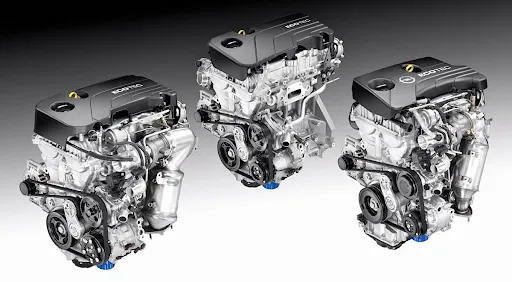
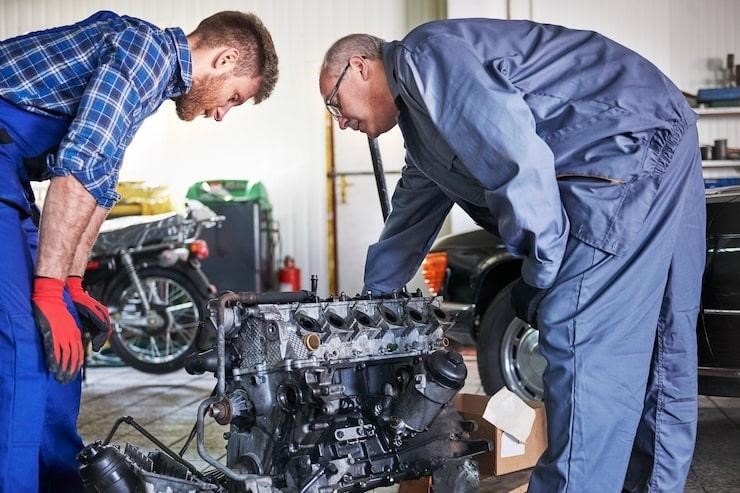
Buyers should treat the word “complete” as a starting point for questions, not proof of inclusion. A proper purchase requires a written component list, real photos, and confirmation of which parts are included, untested, or warranted. Without clear documentation, a “complete assembly” may still lack critical components that impact labor, scheduling, and budget. Missing details can quickly turn a simple replacement into a costly transfer project. That is why every reliable engine assembly buyer guide starts with accurate documentation and verified part inclusion.
What buyers should expect to confirm

At minimum, confirm whether the assembly includes the long block, intake and exhaust manifolds, fuel system hardware, throttle body, injectors or rails where applicable, accessory brackets, sensors, wiring stubs, flywheel/flexplate, and any turbocharger or emissions hardware relevant to the application. Then clarify which of those components are being sold as core assembly pieces and which are actually tested or covered. That distinction matters when evaluating complete engine assembly included parts and expected installation cost.
Also verify what is intentionally excluded. Many sellers exclude alternators, starters, compressors, harnesses, control modules, hybrid-specific parts, cooling components, or emissions equipment even when those parts appear in listing photos. A buyer who does not clarify this in writing often discovers the gap only after the engine arrives and installation planning has already started.
Inclusion level affects more than parts cost. It changes freight weight, pallet size, startup procedure, and the amount of transfer labor required from the original engine. A shop can plan correctly when it knows whether it is receiving a bare long block, a dressed long block, or a true complete pullout. The mistake is assuming the seller’s terminology matches the shop’s terminology without forcing a side-by-side item confirmation before payment and shipping. This is how many engine assembly missing parts problems begin.
The parts most often assumed but missing
Sensors are one of the most common surprises in used engine purchases. Engines may arrive with sensors already installed, but that does not always mean they are the correct or tested set the buyer expects. Incorrect or reused sensors can delay startup, trigger immediate fault codes, and create troubleshooting issues during installation. Harness sections and pigtails are another gray area because some assemblies include cut wiring, some include partial wiring, and others include none at all. Many listings fail to clearly explain the difference, leaving buyers uncertain about what will actually arrive with the engine assembly.
Accessories are also frequently misunderstood during assembly-level purchases. Alternators, power-steering pumps, AC compressors, and turbochargers are often attached to the engine for convenience, yet many are sold without any functional guarantee. Buyers must determine whether those parts are simply included physically or whether they are supported as part of the complete assembly. If accessories are untested, additional inspection, repair, or replacement costs should be expected before startup. Warranty coverage may also vary between the long block itself and the attached accessories, creating confusion if expectations are not clarified beforehand.
Emissions and intake/exhaust components create another major source of problems. Throttle bodies, manifolds, EGR hardware, fuel rails, and injectors can differ by calibration, emissions family, or model year. Even when those parts physically arrive attached to the engine, they may not match the buyer’s chassis or electronic setup. Understanding what comes with used engine assembly purchases is critical because compatibility problems often lead to expensive delays, failed installations, and additional replacement costs after delivery.
Houston Engines recommends treating assembly-level purchases as a documented inventory decision rather than assuming the word “complete” guarantees everything needed. Buyers should request a written included-parts list, ask which components are tested versus untested, and confirm what must transfer from the original engine. The clearer the documentation is before shipment, the fewer installation surprises, startup problems, and budget overruns occur later.
How to buy the right assembly level
Start by clearly defining what your job actually needs before selecting any engine assembly. If the goal is a fast replacement with minimal transfer work, the assembly should include verified, compatible external components, and the buyer must confirm which parts are supported, tested, or included for installation. If the plan is to reuse original accessories and sensors that are already known to be in good condition, then a less-complete assembly can still be a practical and more cost-effective choice. The key is aligning the purchase with the real installation requirement instead of relying on a vague listing title.
Before approving shipment, always request detailed photos of the exact unit and compare them with the written included-parts list. Confirm application compatibility and ask directly about any missing, damaged, or untested components. A correct assembly purchase saves labor, reduces downtime, and avoids unnecessary complications. A vague assembly purchase transfers uncertainty directly into the installation bay, often leading to startup issues, fitment delays, and unexpected repair costs after delivery.

Complete engine assembly buying checklist
Get a written parts-included list before paying for any engine purchase. The word “complete” is not specific enough to budget labor, freight, or startup planning correctly, and relying on it alone can lead to costly misunderstandings during installation. A clear list ensures both buyer and seller are aligned on what is actually being provided and prevents confusion later when the engine arrives.
It is also important to separate included parts from tested or warranted parts. A component may arrive attached to the engine, but that does not mean it is part of the supported sale. Some items are included for convenience only and may not carry any functional guarantee. Understanding this distinction helps avoid unexpected replacement costs and reduces installation risk once work begins.
Always verify the exact unit with photos and compare those images to the written included list. This step helps confirm that what is promised matches what is being shipped. The fewer assumptions made before shipping, the fewer surprises appear at install time, saving both labor and downtime during the replacement process.
Finally, match the assembly level to the job requirements. The right purchase is one that includes exactly what the installation needs—no less, and no falsely assumed “extras” that were never actually guaranteed. Clear alignment between job needs and engine assembly scope ensures a smoother, more predictable installation outcome. Contact us for clarification before ordering.
Get our latest news and promos
QUALITY ASSURED


SATISFACTION GUARANTEED

UNPARALLELED SUPPORT
Houston Engines
Proud Member



Social Media
Payments Accepted
Ship Via